
Memory is not a single thing. It is a layered, dynamic system that scientists have spent centuries trying to understand, map, and ultimately improve. At the center of this exploration sits cognitive memory function — the brain’s remarkable ability to absorb, sort, store, and retrieve information in ways that define who we are and how we engage with the world. From early philosophical musings to cutting-edge neuroscience, the journey of understanding memory reveals just how far we have come, and how much further we still have to go.
The Ancient Roots of Memory Science
Long before the invention of brain imaging technology, philosophers and physicians were grappling with questions about memory and cognition. Aristotle described memory as an impression left on the mind, much like a seal pressed into wax. This metaphor, while simple, captured something essential: that experiences shape the brain in lasting ways. For centuries, understanding remained largely theoretical. The brain was recognized as important, but its inner workings were a mystery wrapped in philosophy rather than science.
The 19th century changed everything. Hermann Ebbinghaus conducted the first systematic experimental studies on memory and concentration in the 1880s. By memorizing and testing himself on nonsense syllables, he produced the famous forgetting curve — demonstrating that information processing begins to fade rapidly unless reinforced. His work laid the empirical groundwork that transformed memory from a philosophical concept into a measurable, testable science. Brain health and cognitive function were no longer just matters of fate or moral discipline. They could be studied, quantified, and influenced.
The 20th Century and the Architecture of Brain Memory Systems
The mid-20th century brought a revolution in how scientists understood brain memory systems. Richard Atkinson and Richard Shiffrin introduced their multi-store model in 1968, proposing that memory moves through distinct stages: sensory memory, short-term memory, and long-term memory. This model gave researchers a framework that transformed learning theory, education, and cognitive psychology almost overnight.
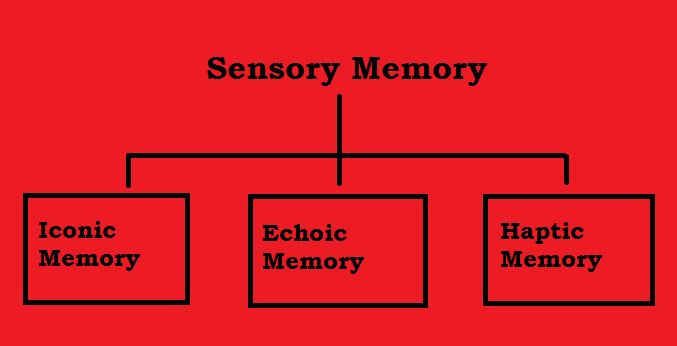
The sensory memory role in this model was crucial but easy to overlook. Sensory memory acts as the brain’s first filter, holding a brief snapshot of incoming stimuli for fractions of a second. George Sperling’s iconic experiments in 1960 had already revealed that visual sensory memory — called iconic memory — could hold far more information than people could consciously report, but only for an instant. Understanding the stages of human memory helped scientists recognize that attention processing was the gatekeeper between sensory experience and conscious thought.
Short-term memory, later refined by Alan Baddeley into the concept of working memory, became a focal point for understanding focus and cognition. Baddeley’s model showed that the brain does not simply hold information passively. It actively manipulates it, using a central executive system supported by specialized subsystems for visual and verbal material. This shifted the understanding of memory and learning from passive reception to active construction — a shift that reverberates through classroom design and cognitive training programs to this day.
How Modern Neuroscience Reshaped Our Understanding of Cognition
The arrival of functional MRI and other neuroimaging technologies in the late 20th century allowed scientists to watch the living brain at work. For the first time, researchers could observe which regions activated during different memory tasks, linking cognition to specific neural structures with precision that earlier generations could only dream of.
The hippocampus emerged as a critical player in forming new memories, while the prefrontal cortex was shown to be central to working memory and attention. Researchers discovered that memory and concentration are deeply interdependent — that sustaining focus is not just a matter of willpower but of coordinated neural activity across multiple regions. Neurotransmitters like dopamine and acetylcholine were found to play pivotal roles in how efficiently information is encoded and retrieved.
This period also deepened appreciation for the sensory memory system as a foundation for all higher cognition. Sensory input and memory are inseparable. Before any information reaches short-term or long-term storage, it must first pass through the sensory register — that fleeting, high-capacity buffer where the brain makes its first unconscious decisions about what matters. You can read more about how sensory memory and focus interact at the neural level in this detailed exploration: https://nulifespan.blogspot.com/2026/09/how-sensory-memory-supports-focus.html #cognitive focus
The research of this era also underscored the importance of brain health as a lifelong endeavor. Studies on aging showed that certain forms of memory decline with age, while others remain remarkably stable. The distinction between crystallized intelligence — accumulated knowledge — and fluid intelligence — the ability to process new information — became central to discussions of cognitive aging and intervention.
The Future of Cognitive Memory Function
We are now entering perhaps the most exciting era in the history of memory science. Advances in artificial intelligence, neurotechnology, and genomics are converging to offer possibilities that would have seemed like science fiction even a decade ago.
Researchers are developing brain-computer interfaces capable of augmenting short-term memory in patients with neurological damage. Early studies have shown measurable improvements in information processing speed and memory recall using targeted electrical stimulation. Meanwhile, genetic research is identifying markers associated with stronger or more vulnerable brain memory systems, opening the door to personalized interventions before cognitive decline even begins.
At the same time, lifestyle-based research continues to validate what many have long suspected: that sleep, physical activity, nutrition, and mindfulness practices have profound effects on memory and learning at the neurological level. The future of brain health is not purely technological — it is integrative, combining high-tech diagnostics with fundamental habits that support cognitive function from the ground up.
What remains constant across every era of discovery is that attention processing sits at the heart of memory. No matter how sophisticated our understanding becomes, the ability to direct and sustain focus continues to determine what we remember and what we let slip away.
Conclusion: A Legacy Built on Curiosity
The history of cognitive memory function is a story of relentless human curiosity. From Aristotle’s wax tablet to Ebbinghaus’s forgetting curves, from Atkinson-Shiffrin’s model to real-time brain imaging, each generation has added a layer of understanding that the next builds upon. Today, we stand at the edge of breakthroughs that could transform how we support cognition across the human lifespan. Understanding memory — how it begins in the sensory register, consolidates through attention, and solidifies through repetition and emotion — is not just academic. It is deeply, personally relevant to how we learn, grow, and maintain our sense of self throughout life.
