
When evaluating peptide quality, the majority of people focus on pureness (HPLC) and identity (mass spec). Those verify you have the correct particle which it’s fairly tidy from peptide-related results. High-Performance Liquid Chromatography (HPLC) is the standard technique for measuring peptide pureness.
It’s an extra step that offers scientists self-confidence that each peptide fulfills consistent, proven criteria. Peptide purity is commonly revealed as a portion, such as 95% or 98%. This number represents how much of the example is made up of the desired peptide series. For a lot of laboratory applications, a pureness of 95% or greater is thought about research-grade. Previous short articles in this series have highlighted exactly how peptide synthesis has actually allowed the growth of a large range of powerful vaccinations and restorative representatives.
A solid test record can sustain purity, identity, and batch traceability. It does not transform a research compound into a clinical product, and it does not change speculative validation in the scientist’s very own system. The peptide sample is liquified in a suitable solvent and loaded right into an autosampler. The injector introduces an accurate volume of example right into the mobile-phase stream.
- Third-party laboratory validation can substantially aid in this compliance process.
- Laboratory recognition of peptides is not only a scientific ideal practice– it’s typically a regulative requirement when peptides are utilized in restorative development or scientific study.
- HPLC divides peptides based on their interactions with a stationary phase, enabling contaminations and by-products to be identified and quantified.
- Along with HPLC and MS, specialized labs may use orthogonal strategies for added accuracy.
The Peaks
A 2016 survey released in Nature located that greater than 70% of researchers had attempted and failed to reproduce one more scientist’s experiments. While peptide purity isn’t the only element, using inadequately characterized reagents is an identified contributor to irreproducible outcomes. This is why credible providers offer both HPLC and MS information on their Certifications of Analysis. As molecules exit the column, they go through a detector– typically a UV detector set to 214 or 220 nm, wavelengths where the peptide bond takes in light strongly. The detector records how much UV light is taken in in time, creating a chart called a chromatogram. Purity is the percent of books in the shipment that have every web page published appropriately, in the right order, without missing phases and no extra pages packed in.
Absence Of Efficient Approaches For Architectural Modifications And Sequence Confirmation
Importantly, this purity number is commonly identified after purification (e.g. by HPLC) and focuses on peptide contaminations– it doesn’t count recurring water, salts, or counter-ions in the dried peptide powder. To put it simply, the pureness percent has to do with the make-up of peptide species in the example, not the weight payment of water or salts. If you have actually ever before gotten an artificial peptide for a lab experiment, you’ve likely noticed a pureness percent on the certification of analysis– generally worths like 95%, 98%, or even 99%. Peptide pureness is a vital quality metric that informs you what fraction of a peptide example is the intended product versus undesirable spin-offs. In straightforward terms, a peptide detailed as 95% pure consists mainly of the target peptide (95%), with the remaining ~ 5% comprised of contaminations. These contaminations can include points like reduced or truncated sequences, deletion variants, oxidized residues, or various other small side-products from the synthesis process.
Where can I send my peptides to check for purity?
ACS Peptide Testing Labs is an expert peptide evaluation laboratory that approves examples from all 50 states. Whether you require to check peptide pureness, verify a vendor'’s Certification of Evaluation, or run detailed contaminant testing, our lab provides fast, precise results with thorough coverage.
Top-tier laboratories typically report peptide pureness well over 95%, regularly ≥ 98-99%, by utilizing state-of-the-art HPLC and MS evaluations. They also check both raw materials and ended up Peptide Vials; More Bonuses,, which assists capture any contaminations, deterioration products, or formula inconsistencies. This level of extensive analysis makes certain the peptide’s precision– indicating the series and pureness are exactly as identified– which is crucial for experimental reproducibility. By confirming make-up via numerous verified approaches, lab validation guarantees that researchers obtain a high-purity peptide that will perform as anticipated in the laboratory. Relied on labs use proven testing protocols to evaluate peptide examples and validate their purity and chemical structure.
Peptide screening is the set of analytical checks made use of to assess a peptide sample before it is used in a research study process. In useful COA review, the term generally describes pureness screening, identity testing, and documentation testimonial. Purity screening asks just how much of the spotted example is the primary peptide versus related impurities. Identity screening asks whether the determined mass or sequence-related proof matches the desired peptide. Paperwork testimonial asks whether the report is batch-specific, deducible, and detailed enough to be investigated.
While not shills for “large pharma”, we extremely value the substantial financial investment they make into science, quality control, and quality control to reduce these threats for pharmaceutical drug users. A solitary HPLC technique can not and will not determine and quantify whatever that is in a mixture in one pass; it just does not work in this way. Truly, no qualitative or measurable analytical method (LC, MS, FTIR, NIR) can do what users perceive as the pureness result on certifications of analysis today.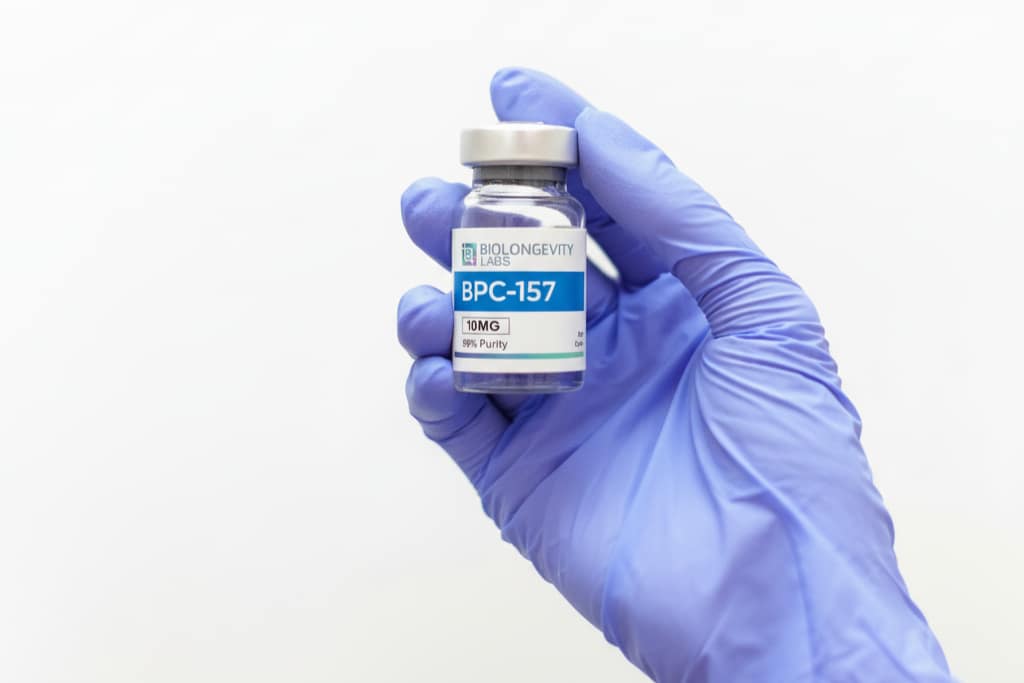 Yet bear in mind, these 2 peaks do not stand for all feasible pollutants, excipents, or various other chemicals in the product.
