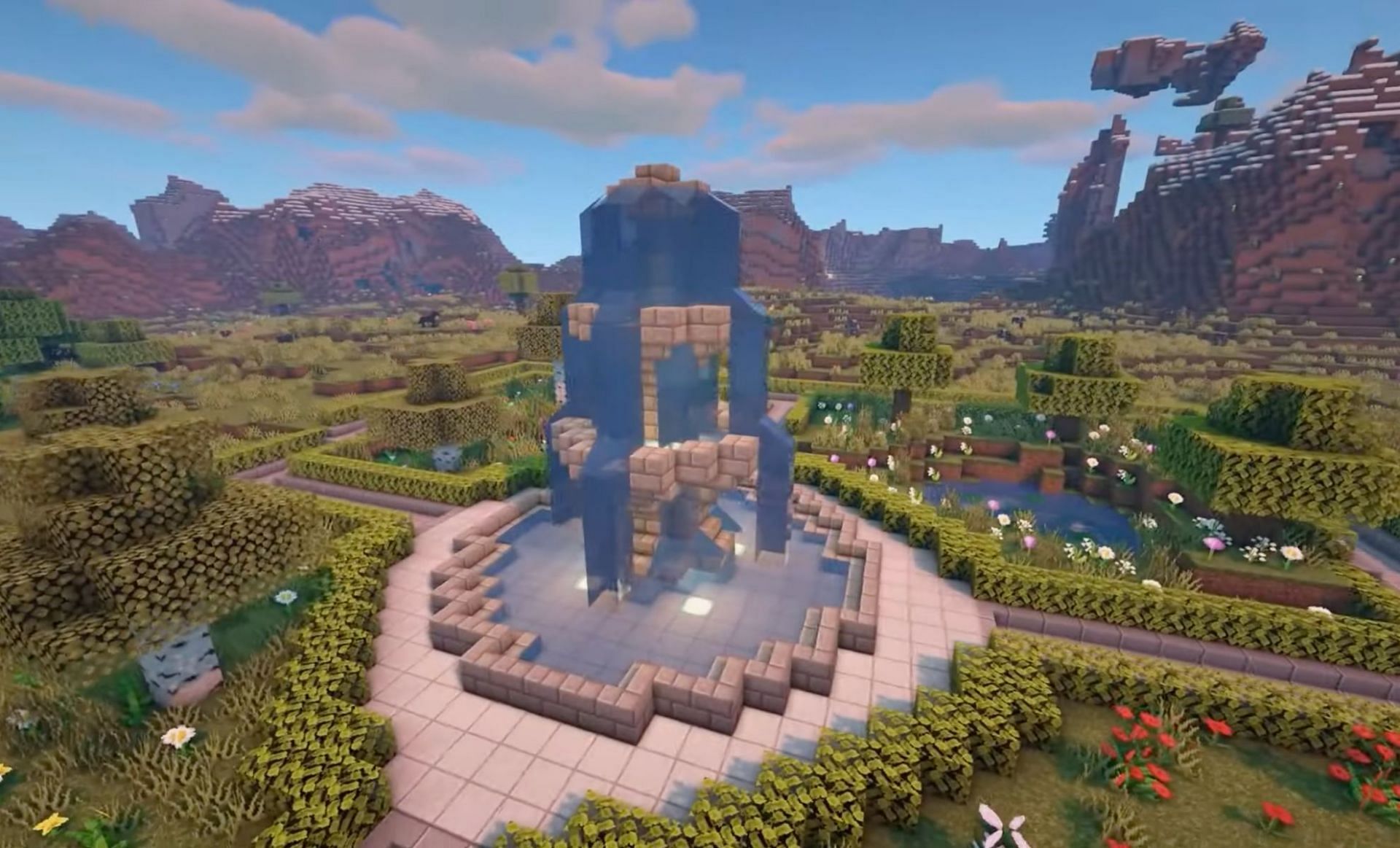
Once the player begins building up the town people arrive pretty quickly to populate the town. The primary role of NPCs is to give you quests, so the more you build, the more NPCs arrive, and the more quests you have available. Quests can cover a wide range of tasks, someone can simply request that you build them their room, while others may request you go see what is on top of a distant mountain or go kill a powerful enemy. You can put a sign in front of a structure to limit who can occupy the space. Or if there is an NPC you don’t like, you can build a poor shack. You can also use this to force people to sleep next to each other. There is a lot of freedom in this game to do whatever you want.
Rune Factory is a niche but still reasonably successful RPG series that combines dungeon crawling with farming elements. This dichotomy creates a fun mix of action and slice-of-life relaxation, and Rune Factory 4 Special arguably represents the Japanese franchise at its b
Now Minecraft has no overarching objective, so it instantly challenges McGonigal’s claim that a goal is required in a game. But actually, Minecraft ’s main goal is composed of multiple smaller goals. It doesn’t have a “grand” objective, but it has smaller objectives, little bite-size incentives that replace each other over time and take the role of a larger objective. First you collect resources, then you build a house, then you survive the night, then you wake up and continue, but each with steadier and steadier increases in scope and scale. Even better, there’s no one direction to go. Being able to explore in multiple regions and build whatever you feel is satisfactory is open-ended. You are given tools and no direction, yet you are still creating. You’re making the direction. This is a massive undertaking, one that changes everything that anyone knew about videogames before, and it’s a bigger embodiment of the “sandbox” mentality than Grand Theft Auto has even been.
No game has done what Minecraft has done. No game even remotely associated with the “sandbox” element has realized that truest sense of childlike wonder and exploration that Notch and his friends at Mojang have achieved. They’ve changed how you can approach the fundamental necessities of a game, while fueling a sense of personal freedom that no game has ever reached. It’s clear that minecraft Building guide is a commercial success and a cultural milestone, but if as gamers you look into what Minecraft is and what it does, you realize that it’s not just about goofy blocks of sands, hissing Creepers or that square sun rising over the horizon. Minecraft is a landmark title in games as a whole; it does things that no game before it has achieved, at least not at this level. Making a game a work of art isn’t about flowering up the graphics or enlisting big-name voice talent; it’s about using what you can only do in a game and making something fresh and new. It’s about taking these distinctive qualities of the gaming medium and breaking free of convention. Minecraft does all that. In spades. If we’re to show the world that games can do amazing things, things that film or TV can never hope to ever achieve, Notch’s indie-game-that-could is our best weapon. Plainly and simply, Minecraft is a work of art.
Slay the Spire mixes things up in a refreshing way by combining the dungeon crawler genre with tabletop card game elements, with combat solely using this card-based system. Players can customize their decks before they head into the procedurally-generated dungeon levels of the Sp
Sometimes, though, developers go the extra mile and build a vertical slice to demonstrate their game. This is a lot of work – even re-using assets from the game, you’re looking at many hours of scripting and scenario design – but the payoff speaks for itself. Bravely Default’s demo is essentially its own mini-RPG, with three dungeons to conquer, five bosses to fight, and a whole bunch of enjoyable grinding to do in the interim. It has condensed versions of the streetpass and job mechanics from the main game that allow you to familiarize yourself and get to the fun quickly. The demo may take all of its assets from the main game, but it uses them to craft an experience entirely distinct from it. In doing so, it gets straight to the essence of what makes the full game fun. What’s more, if you master the demo, you get rewards to help you out in the early game, as well as a head start on streetpasses.
The expansive nature of Minecraft ’s world is also what contributes to this fully realized sandbox vision. The worlds are virtually infinite (on PC) and provide ample opportunity to adapt and explore multiple biomes and topography. There’s no real reason to go to one area over the other, but players are frequently compelled to do so. It’s an embrace of wanderlust, one that has influenced many other games like the upcoming No Man’s Sky . You have no objective beyond the horizon and there might be seriously dangerous monsters out there. You might not be well-equipped or even supposed to go there at the current equipped state. But you keep going, just to see. Just to explore.