
What actually determines whether a machine vision deployment pays for itself in six months or drags on for two years without delivering measurable value? Is it the resolution of the sensor, the speed of the processor, or something less visible sitting between the camera and the production controller? For manufacturing engineers and system integrators evaluating machine vision software, the answer usually has less to do with raw hardware specifications and more to do with how intelligently that hardware is orchestrated.
Many automation teams assume that upgrading to a higher-resolution sensor or a faster frame rate will automatically shorten the return-on-investment timeline. In practice, the software layer that governs image acquisition, inspection logic, and communication with PLCs or robot controllers is what determines whether a system scales reliably across shifts, product variants, and line speeds. This article examines the technical factors that separate a merely functional vision deployment from one that compounds savings quarter after quarter. machine vision lenses
Why Does Software Architecture Matter More Than Sensor Specs?
A camera with a twelve-megapixel sensor is only as useful as the pipeline that processes its output in real time. Poorly optimized software introduces latency between image capture and decision output, and on a line running at sixty parts per minute, even a fifty-millisecond bottleneck can force a mechanical slowdown that erodes the throughput gains the vision system was supposed to deliver. Intelligent software platforms address this by using multi-threaded acquisition, hardware-accelerated filtering, and deterministic triggering that keeps inspection cycles synchronized with encoder pulses or PLC handshakes rather than relying on fixed time delays.
The distinction becomes clearer when you consider calibration drift. A rigid, rule-based algorithm tuned for one lighting condition will misclassify parts the moment ambient light shifts by a few lux, forcing an operator to stop the line and manually retune thresholds. Adaptive machine vision systems instead monitor histogram statistics continuously and adjust exposure or gain parameters within defined tolerance bands, which means fewer unplanned stops and a measurably lower cost per inspected unit over a full production year.
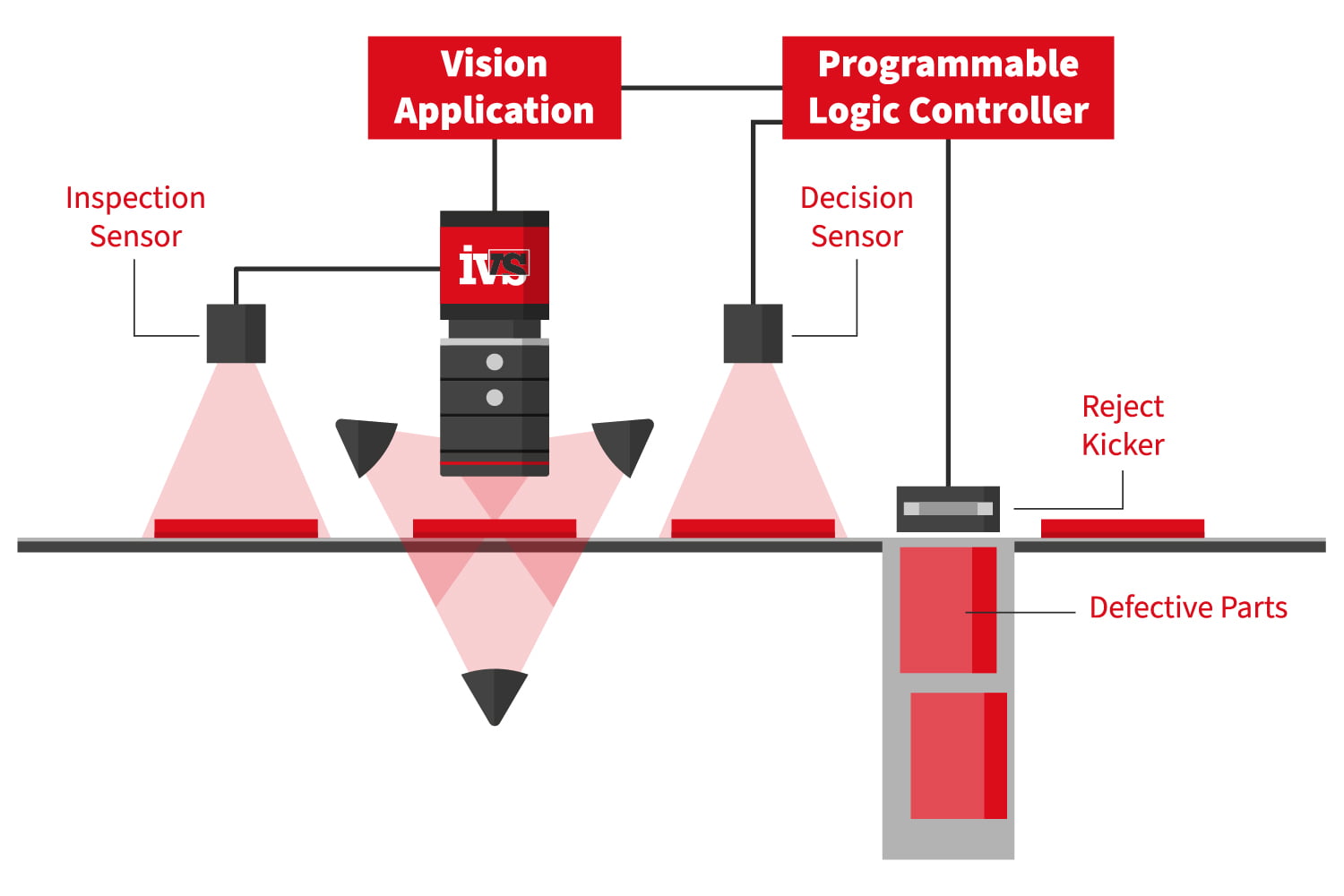
How Do Deep Learning Models Reduce False Rejects?
Traditional blob analysis and edge-detection routines struggle with natural variation – a scuff mark on a metal bracket, a slightly uneven weld bead, or a label printed a millimeter off-center. These variations often trigger false rejects even when the part is functionally sound, and every false reject represents wasted labor for re-inspection plus potential scrap cost. Convolutional neural network classifiers trained on a representative dataset of acceptable variation can distinguish cosmetic noise from genuine defects far more consistently than hand-tuned rule sets, and this directly reduces the hidden cost of over-rejection that rarely appears in initial ROI calculations.
Consider a mid-sized automotive supplier inspecting stamped brackets at a rate of forty units per minute. Suppose their legacy rule-based system rejected eight percent of parts as false positives, each requiring two minutes of manual re-verification by a quality technician. At forty units per minute across two shifts, that false-reject rate alone consumed roughly ninety technician-hours per week. Replacing the classifier with a trained deep learning model that dropped false rejects to under two percent freed most of that labor for higher-value tasks, which is the kind of calculation that should sit at the center of any ROI justification for machine vision software solutions. ClearView Systems

What Makes Integration with Robotic Guidance Systems Difficult?
Robotic pick-and-place applications demand more than a pass/fail signal – they require precise coordinate data delivered within tight timing windows so the robot controller can compute an approach trajectory before the part moves out of reach on a conveyor. This is where compatibility between vision software and robot communication protocols becomes a genuine engineering constraint rather than a checkbox feature. Systems that support native EtherCAT, PROFINET, or GigE Vision triggering without requiring custom middleware translation layers typically integrate in days rather than weeks.
Like a translator fluent in both languages of a negotiation, well-designed vision software does not merely report what it sees – it delivers that information in a dialect the robot controller already understands, without forcing engineers to build a bridge from scratch.
Poor integration shows up subtly at first: a robot that occasionally grips a part off-center, a slight increase in cycle time as the controller waits for coordinate confirmation, or intermittent faults that seem unrelated to vision at all. Diagnosing these issues after installation is far more expensive than specifying compatible communication standards during the procurement phase, which is why experienced integrators treat protocol support as a primary filter when comparing the machine vision lenses among competing platforms.

Which Camera and Lighting Combinations Actually Hold Up in Harsh Environments?
Industrial floors expose machine vision cameras to vibration, particulate contamination, temperature swings, and electromagnetic interference from nearby welding or motor drive equipment. A camera rated only for laboratory or office conditions will suffer sensor noise, connector failure, or lens fogging well before its expected service life, and replacing hardware mid-contract quietly erases whatever ROI gains the initial deployment achieved. IP67-rated enclosures, locking connectors, and fanless designs with passive heat dissipation are not luxury specifications – they are baseline requirements for any line running continuous shifts in a foundry, stamping plant, or food processing facility with washdown cycles.
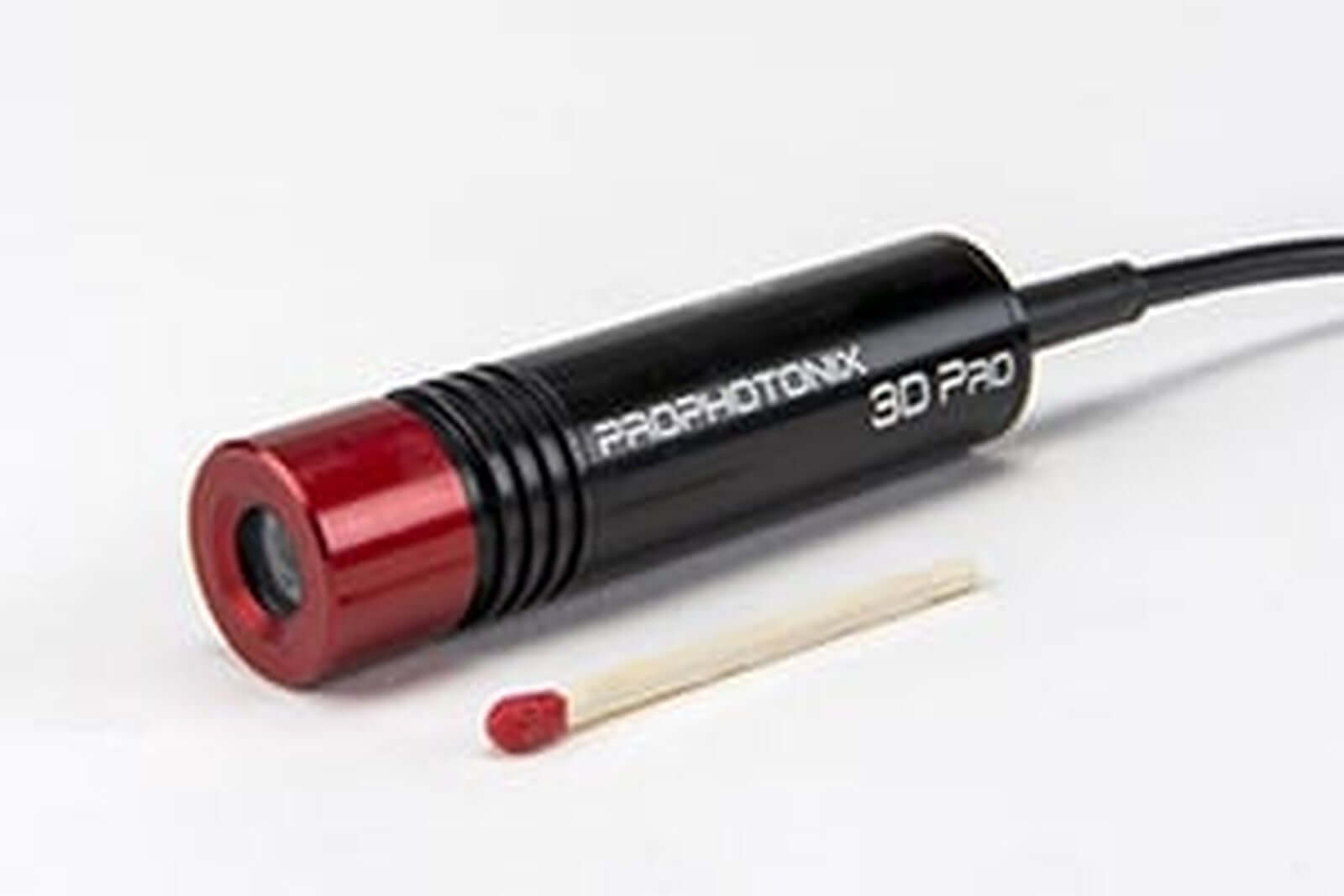
Lighting selection deserves equal scrutiny. Structured light and telecentric lenses solve dimensional measurement problems that standard illumination cannot, particularly when inspecting reflective metal surfaces or transparent packaging film where ordinary diffuse lighting produces glare or insufficient contrast. Engineers who skip this evaluation often discover the shortfall only after installation, when the software cannot reliably locate part edges regardless of how sophisticated its algorithms are – a reminder that no software layer, however advanced, can fully compensate for an inadequate optical setup. industrial cameras

How Should You Calculate Payback Period Before Purchasing?
A defensible ROI calculation needs more inputs than the sticker price of cameras and software licenses. Integrators should account for installation labor, operator training hours, expected reduction in scrap or rework, and the value of throughput gains from reduced false rejects and faster cycle times. The following sequence outlines a practical approach used by many automation teams when building a business case for a new or upgraded vision deployment.
- Document current defect escape rate, false-reject rate, and average cycle time on the target line over a representative four-week period.
- Estimate the labor cost tied to manual re-inspection, rework, and warranty claims attributable to vision-related quality gaps.
- Obtain quotes for hardware, licensing, and integration labor, including any middleware needed for robot or PLC communication.
- Model expected performance improvements conservatively, using vendor-supplied benchmark ranges rather than best-case marketing figures.
- Divide total implementation cost by projected monthly savings to determine payback period, then stress-test the figure against a slower-than-expected adoption curve.
This structured approach exposes cost drivers that a simple hardware quote conceals. Software licensing models, in particular, vary considerably – some vendors charge per camera, others per inspection station, and a few offer site-wide licensing that becomes more economical as deployments scale beyond a handful of stations. Comparing these models against projected growth in inspection points over the next three years often changes which platform looks most attractive on paper.
Which Platform Fits Your Production Environment Best?
No single vendor dominates every use case, and the label “top machine vision software” means little without context about line speed, part complexity, and existing automation infrastructure. A platform optimized for high-speed pattern matching on simple geometric parts may underperform when asked to handle deep learning classification on textured surfaces, while a platform built primarily for AI-driven defect detection may lack the deterministic timing controls needed for precision robotic guidance. The table below compares four common evaluation criteria across platform categories rather than naming specific products, since the right fit depends heavily on your particular inspection task.
| Evaluation Criterion | Rule-Based Platforms | Deep Learning Platforms | Hybrid Platforms |
|---|---|---|---|
| Setup time for new part variants | Fast for simple geometry | Slower; requires training data | Moderate; reuses templates plus models |
| Tolerance to lighting variation | Low without careful tuning | High with diverse training set | High |
| Typical hardware requirement | Standard industrial PC | GPU-accelerated processor | GPU recommended |
| Best suited application | Dimensional gauging, presence checks | Cosmetic defect detection, sorting | Mixed-line quality control |
Integrators frequently underestimate how much long-term maintenance cost depends on this initial platform choice. A rule-based system deployed on a line that later introduces frequent product changeovers will demand constant re-tuning by a trained engineer, while a deep learning system deployed on a stable, single-product line may represent unnecessary computational overhead and licensing expense. Matching platform category to actual production variability, rather than choosing based on brand recognition, is where much of the accelerated ROI in top machine vision software selection actually originates.
What Ongoing Support and Update Cycles Should You Expect?
How Do You Justify the Investment to Non-Technical Stakeholders?
Making the Vision Investment Pay for Itself
Frequently Asked Questions
How long does a typical machine vision software deployment take from purchase to full production use?
For a single inspection station with standard communication protocols, integration and commissioning typically takes two to four weeks, including calibration and operator training. Deployments involving custom robotic guidance or multiple camera stations synchronized across a line can extend to eight or twelve weeks, particularly if deep learning models require dataset collection and training before validation.
Can existing legacy cameras be reused with new machine vision software, or is a full hardware refresh required?
Many software platforms support GigE Vision or USB3 Vision standards, so cameras compliant with those interfaces can often be reused, which reduces upfront cost significantly. However, if legacy cameras lack sufficient resolution, frame rate, or sensor sensitivity for the new inspection task, replacing just the camera while retaining conveyor and lighting infrastructure is usually more cost-effective than a complete system rebuild.
What happens if a deep learning model misclassifies a defect after deployment – is retraining disruptive to production?
Most modern platforms support incremental retraining using newly flagged images without requiring a full model rebuild or production downtime. Engineers typically collect misclassified examples during normal operation, add them to the training set during a scheduled maintenance window, and redeploy an updated model within hours rather than days.
Is machine vision software worth the investment for a low-volume, high-mix production environment?
It can be, provided the software supports fast changeover between part programs and offers template-based or model reuse features that avoid rebuilding inspection logic from scratch for every variant. Facilities with dozens of low-volume product variants should prioritize platforms with efficient part-recognition and recipe management over raw inspection speed, since changeover time often has greater ROI impact than marginal throughput gains.
How much does ongoing maintenance and licensing typically add to the total cost of ownership?
Annual licensing, support contracts, and periodic model retraining generally add somewhere between fifteen and thirty percent of the initial software cost per year, depending on the vendor’s licensing model and how frequently product variants change. Facilities should factor this recurring cost into payback period calculations rather than evaluating only the upfront purchase price, since it materially affects the multi-year ROI comparison between competing platforms.
