
The Shiny Object Syndrome – When Fighting is So Fun You Forget Why You Commenced
I jumped into Assassin’s Creed Shadows to avenge the scoundrel who killed my sensei. Twenty hours later, I’m wallowing in enemy guts, sketching heron art, and losing sleep over how my hidden blade should look. That is the little magic trick Ubisoft executes—once the fighting feels this satisfying, even the boring chores feel like crises. You see a bandit camp while hunting your main target? It is not just another loot run; it is an arena to see if Naoe’s new poison-dart trick can eliminate six guys before anyone screams. Parkour stops being just fast travel and turns into a wild attack, letting you leap over a spear and stab a tanto in the guy’s neck while airborne. I have blanked out whole story missions because I wanted to find out if Yasuke can knock three foes off a cliff with one charged club swing.
Metal Dance: Why Shadows’ Combat Feels Like Orchestrated Anarchy
What really blows my mind about Assassin’s Creed Shadows is how it turns utter chaos into something you can strategize. Naoe’s kusarigama doesn’t just strike – the chain tugs enemies around, yanking an archer close so Yasuke can crush him flat. The parry timing is always demanding but never cheap, and each weapon alters that tempo in its own way. If you block a katana’s quick slash an instant early, you’ll still be hit by the subsequent blow, yet that same slightly early block works effectively against a heavy odachi swing.
The first time I countered a spear thrust with a lethal riposte, then dropped a smoke bomb and disappeared before his buddies figured out what happened, I actually sprang out of my chair. This isn’t the wooden, unresponsive fighting older AC games served up – every push of the button hits with real heft, allowing you to feel less like a tourist and more like a storm on two legs.
Intense Combat That Almost Ruin the Power Fantasy (But Not Quite)
If you buy PS5 games, the first order of business is: once the blades are out and the commotion kicks in—think of Naoe ducking under an arrow to pierce a guy or Yasuke plowing through three spearmen and breaking helmets—it really does feel almost perfect. Shadows mixes that flowing, cinematic vibe you get in Sekiro or Ghost of Tsushima with the old-school stealth-to-attack shift of Assassin’s Creed, and it merges way better than I expected. Weapon moves look slick too, especially when I’m running Naoe’s twin tantos; rapid cuts, clever parries, and brutal finishers feel extra rewarding because the chaos around me makes each one a small miracle.
But here is the thing: the game attempts you to feel like a complete badass, and occasionally you do, then out of nowhere, it makes a move that throws you up. Consider Naoe, for instance. She can only wield two out of her three weapons, so every time you change gear, you have to pause and choose. I understand the reasoning; it maintains things organized and stops loadouts from ballooning into spreadsheets. Even so, when a job transitions from slinking onto a roof to fighting in the street to evading a patrol on a charging horse, that little rule starts to annoy. Three distinct weapons, each meant for a specific situation, would have added more choices on top of the choices we already have. Instead, the game flaunts that flexibility in your face and shuts the door right before you move through.
Infiltration as Naoe is Assassin’s Creed’s Best Blade Yet
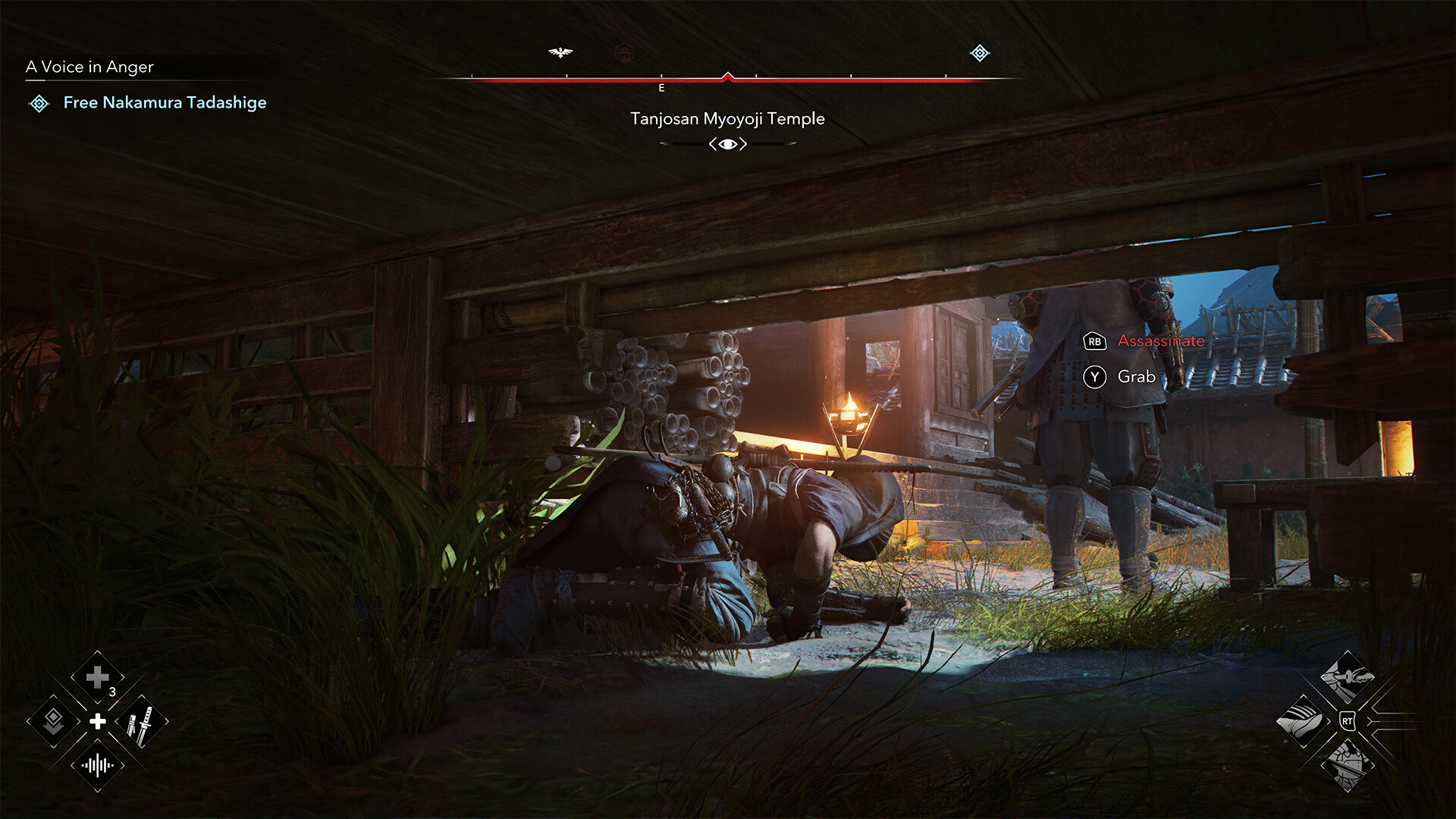
Now we come to the section where Assassin’s Creed Shadows cuts the rivals clean in half: playing stealth with Naoe. Ubisoft has finally perfected the thrumming tension, the white-knuckle wait, and the satisfying snap of a stealthy kill. If you adore action games but still desire those calculated pinpoint moments instead of nonstop explosions, Naoe’s loadout appears like paradise. Lurking in the Assassin’s Creed Shadows, her moves glide together, the enemy patrols tap into sight and sound for once, and the whole gameplay culminates to the smoothest, most lethal stealth the series has ever delivered. Period.
Moving stealthily past guards at night, watching them through a delicate shoji screen, then moving in with only a calm breath and a shining blade is still one of the most thrilling sensations a game can deliver. That impulse to push the limits never wanes, so I poke around for exploits, oddities, and weird holes in the mechanics. Of course, I’ve seen those ridiculous glitch clips—the smoke cloud that phases through brick, or the teleport that drops you behind a boss—but they hardly come up in normal playtime. The majority of the time, the game stands firm, and you only discover an exploit if you really dig for it.
Also the new recon system, which swaps out the old drone buddy, makes you view the map like a genuine ninja tool instead of a GPS dependency. Rather than routinely following a marked route, you get a name, an approximate compass point, and then it’s on you to figure the rest together. That shift feels fresh and exciting if you buy PS5 games. Sort of immerses you deeper into the world, and at last shows that the developers trust players to be more intelligent than a rock. With these final words about Assassin’s Creed Shadows, the most recent release of my favorite franchise, I let you play the game.
