
Why do so many neural network pilots succeed in the lab but stall on the factory floor? What separates a deep learning model that runs smoothly on a workstation GPU from one that must classify parts at line speed on a compact industrial controller? These questions sit at the center of every serious conversation about modern machine vision software deployment, and they deserve concrete, technical answers rather than marketing generalities.
For manufacturing engineers and system integrators, the promise of neural network inference is compelling: fewer false rejects, better detection of subtle cosmetic defects, and classification tasks that rule-based algorithms simply cannot handle. But turning that promise into a repeatable, certifiable production process requires a clear understanding of edge hardware constraints, model optimization, and how machine vision systems integrate with existing PLCs, robots, and MES infrastructure. This article works through the practical decisions involved in taking a trained model from a data science environment to a deployed inspection station. Clear View Imaging
What Does “Edge” Actually Mean for Industrial Inference?
Edge deployment means the neural network executes locally, on or near the camera, rather than sending images to a remote server or cloud cluster for processing. In a production environment, this distinction is not academic. A packaging line running at 600 parts per minute cannot tolerate the round-trip latency of network transmission, and few plant managers want image data leaving the facility for compliance or intellectual property reasons. Edge inference keeps the decision loop tight: image capture, preprocessing, model inference, and actuation signal all happen within a deterministic time window, often under 50 milliseconds on well-tuned hardware.

The practical consequence is that model architecture choices are constrained by the compute available at the edge. A ResNet-50 classifier that runs in 8 milliseconds on a desktop GPU may take 400 milliseconds on an underpowered embedded processor, which is unacceptable for most inspection cycles. This is why quantization, pruning, and architecture selection are not optional refinements but prerequisites for any real deployment. Converting a 32-bit floating point model to an 8-bit integer representation, for instance, can shrink memory footprint by roughly 75 percent while trimming inference latency by half, with only a small, measurable accuracy tradeoff that is often acceptable for binary pass/fail inspection tasks.
Which Hardware Actually Supports Neural Network Inference at the Edge?
Selecting compatible hardware is where many integration projects run into friction. Industrial machine vision cameras increasingly ship with onboard processing – FPGA-based preprocessing, integrated GPU modules, or dedicated neural processing units (NPUs) – but the variation between vendors is significant. Some smart cameras support only proprietary model formats and a narrow set of network architectures, which can trap an integrator into a single vendor’s ecosystem. Others expose standard runtimes such as ONNX or TensorRT, giving engineers freedom to train in one framework and deploy across multiple hardware targets without retraining from scratch.
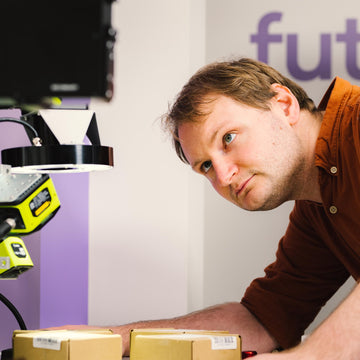
Thermal design and ingress protection matter just as much as raw compute. A smart camera performing inference inside its own housing generates heat that a purely optical camera never had to dissipate, so IP67-rated enclosures with passive heat sinking need validated thermal curves, not just a datasheet claim. Vibration tolerance is equally important on conveyor-mounted or robot-mounted installations; a camera that maintains stable inference accuracy on a lab bench can suffer intermittent frame drops once subjected to the vibration profile of a stamping press. Engineers should request MTBF figures and vibration test data specific to the inference-enabled variant of a camera line, since adding a processor module can change the mechanical and thermal profile compared to the base optical model. industrial cameras
Comparing Edge Deployment Platforms
The table below illustrates how four common categories of edge inference hardware compare across attributes that matter for industrial deployment. These figures are illustrative rather than vendor-specific, intended to frame the tradeoffs engineers weigh when specifying a solution.

| Platform Type | Typical Inference Latency | Power Draw | Ingress Protection | Best Fit |
|---|---|---|---|---|
| Smart camera with onboard NPU | 10-30 ms | 5-12 W | IP67 typical | Single-station inspection, tight footprint |
| Embedded GPU module (external) | 5-15 ms | 15-30 W | IP20 (requires enclosure) | Multi-camera stations, higher throughput lines |
| Industrial PC with discrete GPU | 2-8 ms | 60-150 W | IP20/IP54 depending on cabinet | Complex multi-model pipelines, robotic guidance |
| FPGA-based accelerator | 1-5 ms | 8-20 W | Varies by integration | Ultra-deterministic timing, high-speed sorting |
Notice the inverse relationship between latency and power draw against footprint flexibility. An FPGA accelerator delivers the tightest timing determinism, almost like a metronome compared to the more elastic rhythm of GPU-based inference, but it demands specialized firmware skills that many integration teams do not have in-house. An industrial PC with a discrete GPU offers the most flexibility for running several models in sequence – say, a localization network followed by a classification network – but consumes cabinet space and power budget that a compact smart camera never would.
How Do You Prepare a Trained Model for an Industrial Environment?
A model trained on a curated dataset of well-lit, centered images will underperform when confronted with the lighting variability, vibration-induced motion blur, and part orientation randomness typical of a real production line. Before any deployment, engineers should validate the trained network against a dataset that intentionally includes edge-case images: partially occluded parts, reflective surface glare, and images captured at the actual working distance and resolution of the deployed camera. Skipping this step is the single most common reason a model that scored 98 percent accuracy in validation drops to 85 percent or lower once installed.

Model conversion introduces its own risks. Converting a PyTorch or TensorFlow model into an optimized inference format such as TensorRT, OpenVINO, or a vendor-specific SDK format can alter numerical precision and, in rare cases, change output behavior at decision boundaries. A practical validation step is to run the same test set through both the original and the converted model, comparing outputs image by image rather than relying solely on aggregate accuracy scores. If the converted model disagrees with the original on more than a small fraction of borderline cases, that discrepancy needs investigation before the system goes live, since those borderline cases are often exactly the marginal defects an inspection station is meant to catch. affordable machine vision components
Selecting the right development environment simplifies this process considerably. Comprehensive machine vision software solutions now bundle model training, quantization, and deployment packaging into a single workflow, which reduces the handoff friction between data science teams and controls engineers. Teams evaluating the vision software should specifically check whether the platform supports round-trip validation between training and deployed formats, since that capability alone can save weeks of manual debugging during commissioning.

How Does Neural Inference Integrate with PLCs, Robots, and MES Systems?
A neural network’s output is only useful once it becomes an actionable signal within the broader automation stack. Most deployments translate inference results into discrete I/O signals, EtherCAT or PROFINET messages, or structured data pushed to a manufacturing execution system for traceability. The design decision that matters most here is latency budget allocation: if the total cycle time available for a reject decision is 100 milliseconds, engineers need to know how much of that budget is consumed by image acquisition, preprocessing, inference, and communication overhead, because each stage competes for the same window.
Robotic guidance applications add another layer of complexity, since the neural network’s output – typically a bounding box, segmentation mask, or keypoint set – must be transformed into real-world coordinates the robot controller can act on. This requires accurate camera calibration and a well-maintained hand-eye calibration matrix; an inference model can be perfectly accurate in pixel space and still cause picking failures if the coordinate transform drifts due to a bumped camera mount. Facilities running multiple robotic cells with shared vision infrastructure often standardize on a common integration layer specifically to keep these transforms consistent across stations, which also simplifies spare-parts logistics when a camera needs replacement.
What Ongoing Maintenance Does an Edge AI Vision System Require?
Deploying the model is not the end of the project. Production conditions drift over time – new part suppliers introduce subtle color or texture variation, lighting fixtures degrade, and lens surfaces accumulate dust despite protective housings. A neural network trained on last year’s parts may quietly lose accuracy as these small shifts accumulate, a phenomenon commonly called data drift. Establishing a periodic retraining cadence, informed by logged inference confidence scores and a sample of flagged borderline images, keeps the model aligned with current production reality rather than the conditions that existed at commissioning.
Version control for models deserves the same discipline applied to PLC ladder logic or robot programs. Every deployed model should be tagged with a version number, training dataset reference, and validation report, stored alongside the automation project files rather than left on an engineer’s laptop. When choosing among the top machine vision software platforms for a multi-site rollout, integrators should prioritize tools offering centralized model management across stations, since a defect classification improvement validated at one line should be deployable to sister lines without re-engineering the entire pipeline. This operational discipline is what separates a one-off proof of concept from a production system that a quality department can actually rely on for years.
Common Failure Modes Engineers Should Anticipate
Frequently Asked Questions
How much accuracy is typically lost when quantizing a model for edge deployment?
Well-optimized INT8 quantization typically costs less than 1-2 percentage points of accuracy for classification tasks, though the impact varies by architecture. Testing the quantized model against real production images, rather than trusting the training validation score alone, is the only reliable way to confirm acceptable performance.
Can existing GigE Vision cameras be upgraded to run neural networks, or is new hardware required?
Standard GigE cameras without onboard compute must send images to an external inference device such as an industrial PC or embedded GPU module, since they lack the processor needed for local inference. This is often a cost-effective path if a suitable edge compute device already exists on the line.
How long does it take to deploy a trained neural network to a production inspection station?
Beyond initial model training, integration typically takes two to six weeks, covering model conversion, hardware validation, calibration, and PLC or robot communication testing. Complex robotic guidance applications with tight tolerances often extend toward the longer end of that range.
Do edge AI vision systems require an internet connection to function?
No, true edge inference runs entirely on local hardware and does not require connectivity to operate. An internet or plant network connection is only needed for remote monitoring, model updates, or centralized logging, none of which are required for the inspection decision itself.
What happens if the neural network’s confidence score is low on a given part?
Most deployments set a confidence threshold below which the part is routed for manual review rather than an automated accept or reject decision. Tracking how often this threshold is triggered over time is also a practical early warning signal for data drift.
